
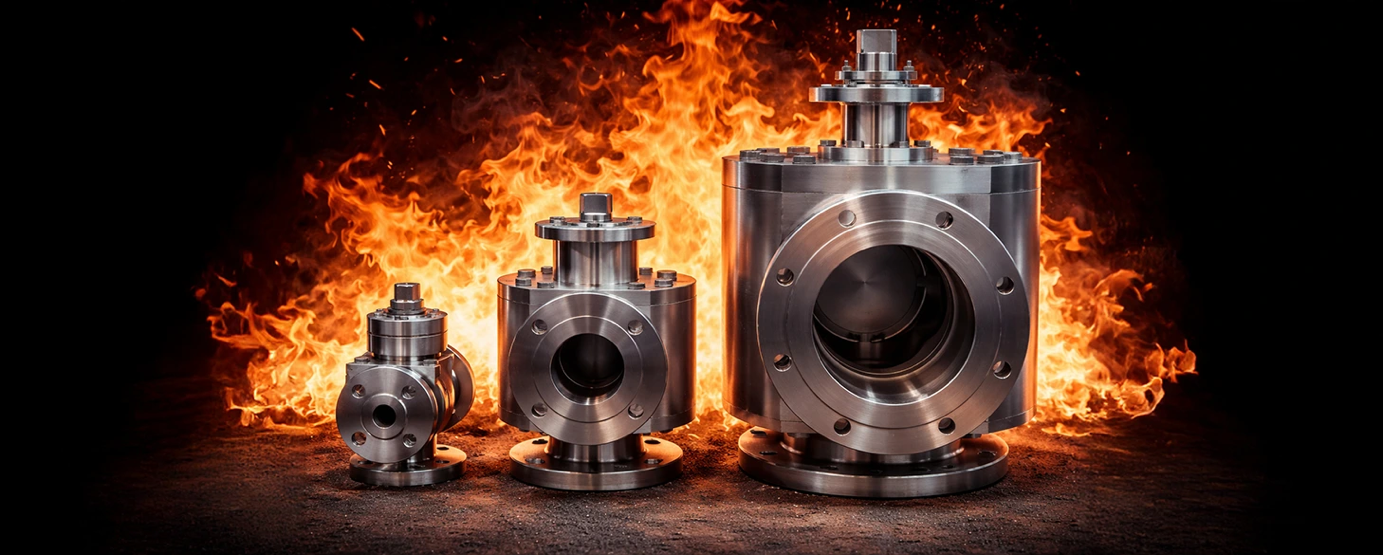
Ball valves often reach their limits in many industrial applications—especially when extreme temperatures, high pressure, or corrosive media are involved. Standard solutions are often not designed for such conditions.
ATEC develops and manufactures ball valves specifically for these demanding applications. This article focuses on high-temperature applications starting at 200 °C.
Applications for high-temperature ball valves
Heat-resistant ball valves are primarily used in processes involving steam or heat-transfer media. Typical applications include:
- Chemical plants
- Pharmaceutical processes
- Energy and heating technology
- Systems with thermal oils or steam
In these areas, valves must withstand high temperatures continuously while providing a reliable seal.
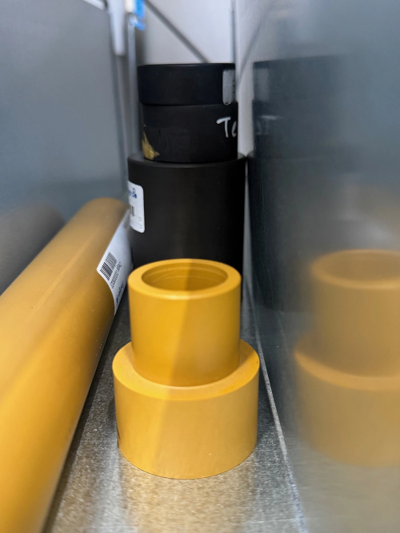
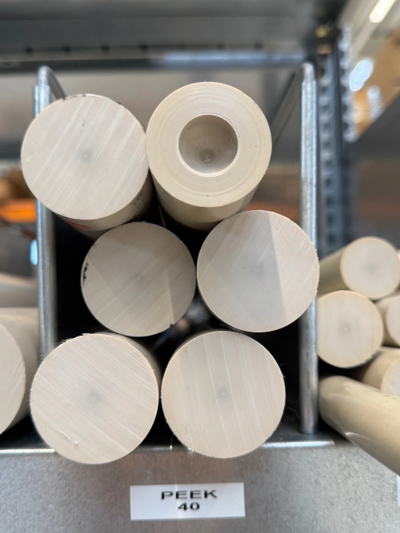
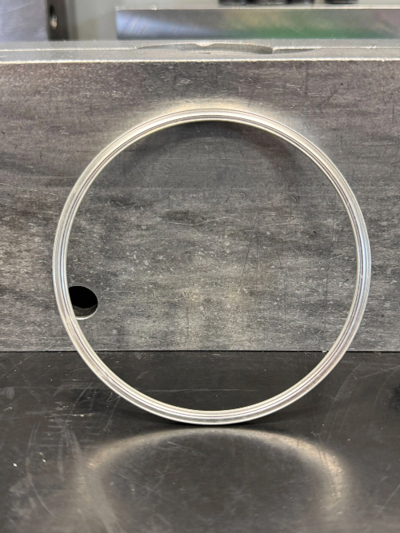
All of these components must be precisely matched to the specific operating temperature and medium. Even minor deviations can lead to material failure, leaks, or a shortened service life.
Heat-Resistant Materials at ATEC
For high-temperature applications, ATEC relies on a carefully selected range of proven materials. The following overview provides an insight into typical solutions:
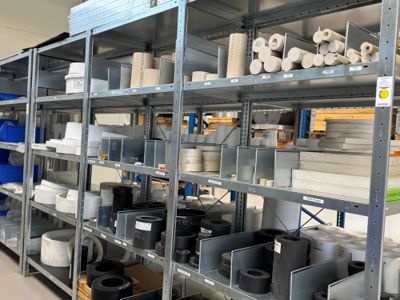
- PEEK (polyetheretherketone): High-performance plastic, dimensionally stable up to approx. 260 °C – ideal for seal guides and ball seals
- Polyimide (PI): Thermally stable high-performance plastic for bearings and sliding surfaces, reliable even above 300 °C
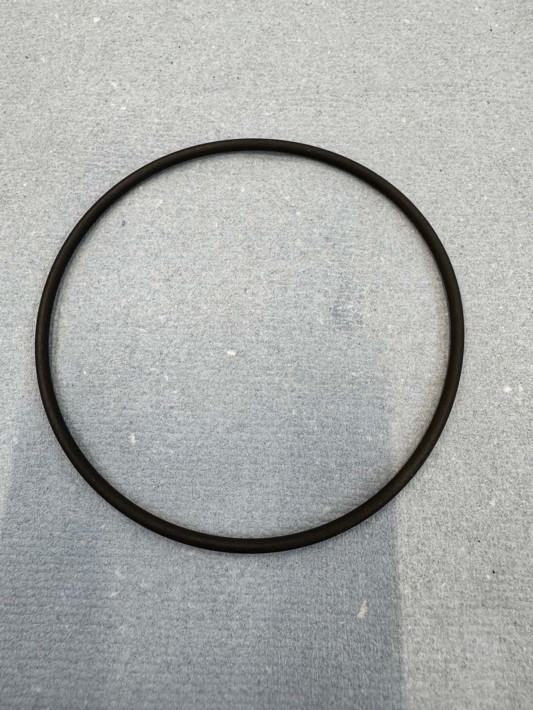
- FFKM O-rings: For aggressive media and temperatures up to 330 °C – combines chemical resistance with thermal stability
- Silver-coated metallic C-rings: Guarantee sealing and heat resistance even at extreme temperatures
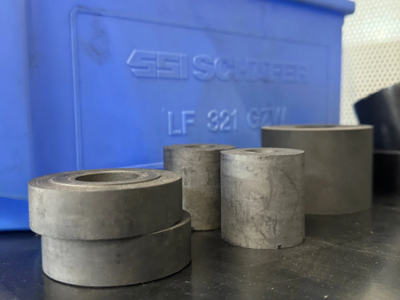
- Pure graphite / electrographite carbon (antimony-impregnated) & carbon bearings: Extremely heat-resistant up to over 600 °C in an inert atmosphere – ideal for high-temperature seals
Complexity of high-temperature applications
Selecting suitable materials is not a standard process. Each material has specific advantages and limitations—for example, regarding temperature resistance, chemical resistance, or mechanical properties.
The optimal solution always results from the interplay of several factors such as:
- Temperature
- Pressure
- Medium
- Operating conditions
The materials listed above therefore do not constitute a complete list, but rather a practical guide.
Conclusion: Reliability despite extreme temperatures
At temperatures above 200 °C, standard materials quickly reach their limits. Brittleness, material deformation, or loss of sealing effectiveness are typical risks.
While the use of high-temperature materials such as polyimide, FFKM, or metallic sealing systems is more costly, it ensures the functionality, tightness, and service life of the valve.
With this targeted material selection, ATEC ensures that ball valves operate reliably, tightly, and durably even under extreme conditions—even at temperatures of several hundred degrees Celsius.